DIY Shampoo Bar

I love shampoo bars! I moved away from traditional shampoo and conditioner a few years ago in an effort to reduce our plastic consumption, and I have to be honest, I never expected to prefer them over regular shampoos! I have found though that my hair is healthier and more manageable since I have made the switch. I am also enjoying the unexpected side effect of less clutter in the shower!

Last summer my sister-in-law Chrissy showed me how to make shampoo bars, and since then I have been off and running. There are a few ways to make soap and shampoo bars and depending on my available time, I switch it up. Well, we are going on vacation next week and I needed a new batch – I am down to a small sliver! I don’t have time for the longer version of the process, so I opted to make a melt and pour batch, my go-to in a pinch. They are quick and easy, especially when you keep the ingredients on hand, which I do. So the other day I whipped up a quick batch of patchouli scented shampoo bars just for me! Billy is not a fan of the scent for himself, but I have always loved it, so I indulged myself a bit by making this batch. It took only half an hour or so to make them, with an hour or two of waiting for them to cool and set! Super easy, super fast, super sustainable. Plus with this recipe there is no fiddling about with lye!

(This section contains Amazon Affiliate links. If you choose to purchase them I will receive a small commission at no extra cost to you.)

For my basic shampoo bar, you will need:

  • 1 lb. melt and pour soap base (I use the goats milk version but there are others)
  • 1 tsp. Shea Butter
  • 2 tsp Jojoba Oil
  • and your fragrance. The amount varies based on the fragrance used, Brambleberry has a calculator to help you use the appropriate amount. Since I used Brambleberry Patchouli in medium strength, this recipe called for 0.28 oz of fragrance.
  • Soap Mold – I like this one from Amazon or this one from Brambleberry
  • a double boiler or, if you don’t have one, a small pot with a baking safe bowl set on top works. I use an old pyrex bowl actually when I make soap.
  • Rubber spatula to stir, measuring spoons

When you have all of your ingredients, you can start!

  1. Get your water going and measure out your ingredients. Cut your soap base into smaller pieces, as this will help the soap to melt easier.
  2. Put your little squares into either the top of the double boiler or your heatproof bowl. Place on top of the pan with the water, which should be at bubbling away. (some people use a microwave. I don’t have one so I do it on the stovetop)
  3. You don’t want the heat to be too high, I leave mine set between low and 2, and keep stirring to make sure it melts evenly. You want all the bits to melt and form a nice milky consistency. When you have achieved this, remove from heat.
  4. Next, mix in the shea butter, the Jojoba oil, and fragrance. If you are getting fancy you can add color to your bars in this step too. For this recipe I kept things simple though.
  5. Once everything is all mixed in together, simply pour into your mold. Then wait for it to completely cool and harden. And you are done! You have made a shampoo bar!

And really that is it! If you end up making a few, let me know!
We made shampoo bars!

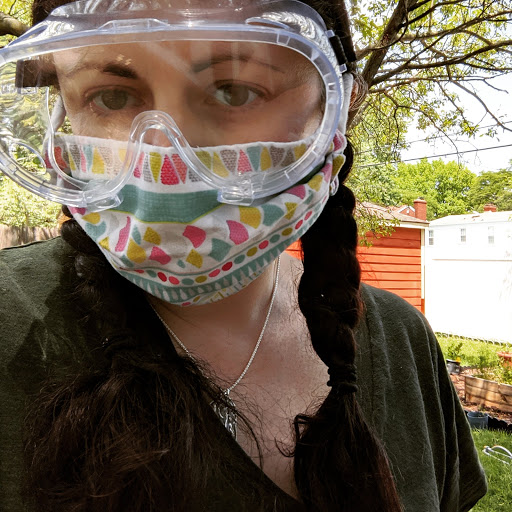
Over the weekend, my sister-in-law Chrissy showed me how she makes shampoo bars. We both are die hard fans of soap bars and shampoo bars, and Chrissy started making them last fall in her kitchen. For my lesson, she moved it outside and we masked up – but only for the lye. We were able to socially distance and hang out and make cool things. I have been wanting to learn how to do this but the lye freaked me out. I had visions of myself falling face first into a vat of boiling lye and emerging as a supervillain. Or something similar. So Chrissy was out to show me how non-scary this whole process really is.

Wasn’t she nice to bring everything outside to show me how to do this? I think so. One thing I learned is to have dedicated bowls and products just for soap making due to the lye. And you can’t use anything aluminum, because that could cause a bad reaction. Chrissy actually bought all of her supplies at the dollar store, including her goggles and long gloves. And then we just wore our masks that are just a normal part of life these days. (My mask is from Love Woolies). I bought my goggles and gloves from Amazon since I am not really shopping these days.

We used a recipe from The Nerdy Farmwife so if you want to make these, make sure to pop over to her site for the full instructions and not just my abbreviated version. She has many recipes as well as a soap making 101 post. That being said, after Chrissy added all the oils and shea butter it was time to add the lye. And it wasn’t as terrifying as I had imagined! You do have to take precautions though – you don’t want to get it on your skin or in your eyes, and you don’t want to inhale the fumes, so avoid breathing those in. If you have breathing issues or sensitive lungs at all, wear a mask. Do this project in a well ventilated room, no matter who you are. Chrissy said that in the winter she keeps the window open in the kitchen and sets the lye solution near it, and when she adds the lye to the water and mixes it, she turns her head away from the mixture. Also, you never want to add water to the lye; you want to add the lye to the water, or you will create a volcanic reaction. But if you follow these rules, you should be ok.

Then we waited for everything to come down in temperature. The lye solution creates a heat all of its own, which is just crazy chemistry! But the oils and things are heated up to melt everything down. So both have to cool before they can be mixed together. While we waited, we just chatted and I checked out the garden and talked to my niece who was running around the yard. A little wren came down and was singing away to us – we later realized it had built a nest in the birdhouse in the tree and was probably mad we were so close! I can’t tell you how just nice it was to be doing something different for a change. Billy had the kiddo, I was chatting with Chrissy, one of my very best friends, and the day was gorgeous.

Once everything was cooled down low enough, Chrissy mixed everything together and used an immersion blender to thicken it. You basically blend it on low until it looks like well, shampoo. You keep doing it until you get trace, which is when you pull the blender out and the drip forms a line on top. Then you carefully pour the mixture into your mold, cover it, and let it sit for 2-3 days. After that time you cut it into bars, then let it cure for however long it takes to cure, a few weeks generally. Then all you have to do is clean up! The lye solution is still active until 24 hours has passed, so you don’t want to get any of this any on your skin. Chrissy carefully washes the smaller items, but bags up the bigger items and stores them in the basement for a day or two before washing, which makes a lot of sense!

I haven’t ordered anything yet to make soap or shampoo bars from scratch – I just placed a huge order for supplies to make melt and pour soap, which basically takes the saponification out of it, but you can still add in scents and other things to personalize the soap. Once I use those supplies up, I am going to put my newfound knowledge to the test!

Thanks so much to Chrissy for taking the time and effort to show me how to do this!